The University of British Columbia
UBC - A Place of Mind
The University of British Columbia Vancouver campus
Math & Science Teaching & Learning through Technology
  • Home
  • Our story
    • Our Team
    • Contact Us
  • Research
  • Tech 4 STEM
  • STEAM
  • Elementary
    • Mathematics
      • Numbers
      • Patterns and Relations
      • Shape and Space
      • Data and Chance
    • Processes of Science
      • Classifying Objects
      • Observations
      • Measurement
      • Experiments
      • Interpreting Data
      • Developing Models
      • Scientific Method
    • Life Science
      • Characteristics of Living Things
      • Needs of Living Things
      • Animal Growth and Changes
      • Plant Growth and Changes
      • Habitats and Communities
      • Human Body
      • Diversity of Life
      • Ecosystems
    • Physical Science
      • Properties of Objects and Materials
      • Force and Motion
      • Properties of Matter
      • Materials and Structures
      • Light and Sound
      • Forces and Simple Machines
      • Electricity
      • Chemistry
    • Earth and Space Science
      • Surroundings
      • Daily and Seasonal Changes
      • Air, Water, and Soil
      • Stars and Planets
      • Weather
      • Renewable and Non-Renewable Resources
      • Exploration of Extreme Environments
      • Earth’s Crust
  • Secondary
    • Mathematics
      • Numbers
      • Relations and Functions
      • Trigonometry and Geometry
      • Sequences and Series
      • Statistics and Probability
      • Financial Mathematics
      • Calculus
        • Differential Calculus
        • Integral Calculus
    • Physics
      • Vectors
      • Kinematics
        • 1-D Kinematics
        • 2-D Kinematics
      • Dynamics
        • Forces and Newton’s Laws
        • Springs
        • Newton’s Laws
      • Momentum
        • Collisions
        • Momentum Principle
      • Work, Energy, Power
      • Thermodynamics
      • Circular Motion
      • Gravitation
      • Wave motion and Optics
      • Particle and Nuclear Physics
      • Equilibrium
      • Electrostatics
      • Circuits
      • Electromagnetism
      • Special Relativity
    • Chemistry
      • Skills and Processes
        • Safety
        • Measurement
        • Data Representation
      • Matter
  • Contribute
  • Spotlight
» Home » displacement

displacement

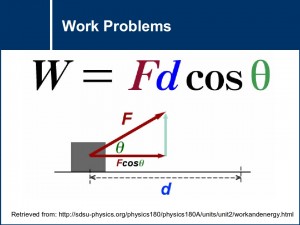
Work Problems

Work Problems

By mvinayag on October 9, 2015

This physics problem set tests your knowledge on work.

Download PDF     Download PPT

Read More | No Comments

Wave Problems

Wave Problems

By mvinayag on October 9, 2015

This physics problem set tests your knowledge on waves through different problems.
Download PDF     Download PPT

Read More | No Comments

More Vector Problems

More Vector Problems

By mvinayag on October 9, 2015

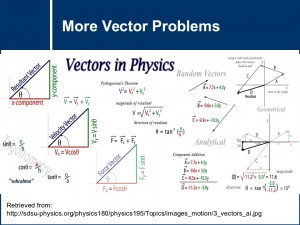
Additional problems – This physics problem set tests your knowledge on vectors through many different problems.
Download PDF     Download PPT

Read More | No Comments

Vector Problems

Vector Problems

By mvinayag on October 9, 2015

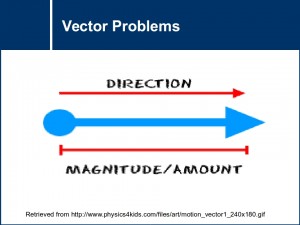
This physics problem set tests your knowledge on vectors.
Download PDF     Download PPT

Read More | No Comments

Kinematics Problems

Kinematics Problems

By mvinayag on October 9, 2015

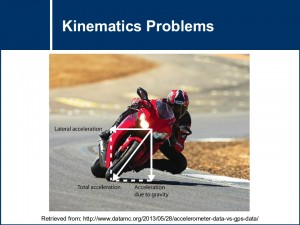
Use these physics problems to test your knowledge on kinematics.
Download PDF     Download PPT

Read More | No Comments

Average Velocity

Average Velocity

By jermko on May 31, 2014

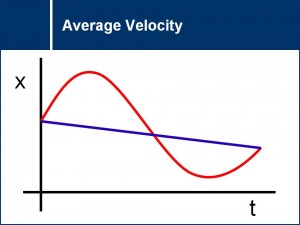
This question set tests the concept of average velocity using both equations and graphs. Students will be able to recognize the difference between average velocity and average speed.
Download PDF     Download PPT

Read More | No Comments

Transformations on Trigonometric Functions

Transformations on Trigonometric Functions

By jermko on December 15, 2013

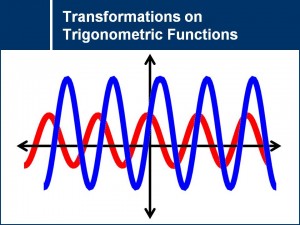
Learn how to apply transformations to trigonometric functions. Students should understand that many transformations are equivalent when applied to periodic functions.
Download PDF     Download PPT

Read More | No Comments

Bouncing Balls

Bouncing Balls

By Harish Appana Satya on August 1, 2012

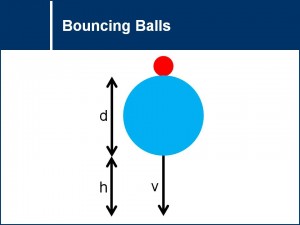
Principles of momentum are used to explain what happens when two balls of perfect elasticity are dropped from a certain height.
Download PDF     Download PPT

Read More | No Comments

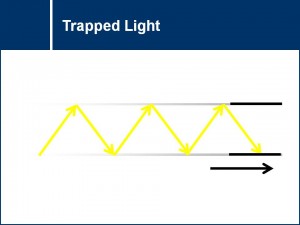
Trapped Light

Trapped Light

By Harish Appana Satya on August 1, 2012

A basic guide of the effects of special relativity and the Lorentz factor.
Download PDF     Download PPT

Read More | No Comments

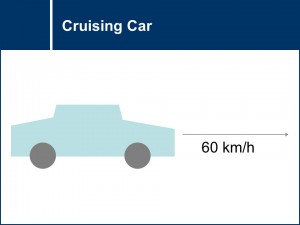
Cruising Car

Cruising Car

By Harish Appana Satya on August 1, 2012

An introduction to acceleration and newton’s laws using a demonstration of a commuting car.
Download PDF     Download PPT

Read More | No Comments

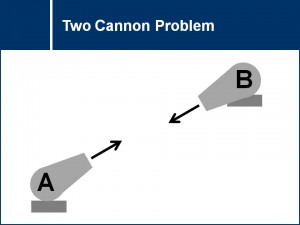
Two Cannon Problem

Two Cannon Problem

By Harish Appana Satya on August 1, 2012

Properties of projectile motion and basic reference frames will be explored through a simple example of two moving cannonballs.
Download PDF     Download PPT

Read More | No Comments

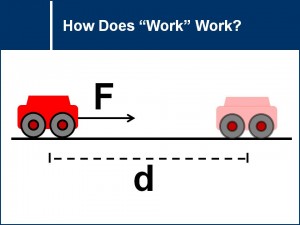
How Does “Work” Work?

How Does “Work” Work?

By Harish Appana Satya on July 25, 2012

This set of questions explore the factors that affect the amount of work done on an object as well as how work translates into kinetic energy.
Download PDF     Download PPT

Read More | No Comments

Ball on a Moving Cart

Ball on a Moving Cart

By Harish Appana Satya on July 25, 2012

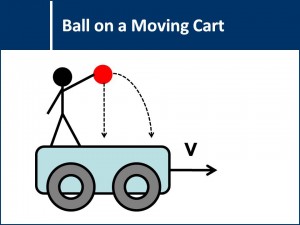
The trajectory of a ball dropped from a person on a moving cart will be modelled using both x-position vs. time graphs and y-position vs. time graphs. The scenario will be analyzed from the point of view of an observer on the cart and on the ground.
Download PDF     Download PPT

Read More | No Comments

Modelling a Race

Modelling a Race

By Harish Appana Satya on July 24, 2012

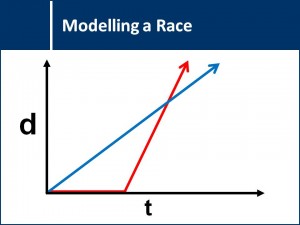
The concepts of position, velocity and time will be used to model a scenario involving two people racing towards a finish line. Information will be presented through equations and graphs.
Download PDF     Download PPT

Read More | No Comments

Cannonball Trajectories

Cannonball Trajectories

By Harish Appana Satya on July 17, 2012

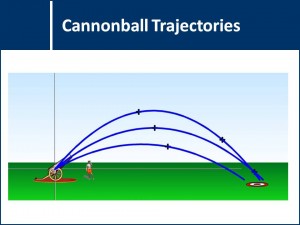
Velocity will be separated into vertical and horizontal components in order to analyze the factors that influence the trajectory of a cannonball. The questions are based off the following PhET simulation, which can be used to double check answers: http://phet.colorado.edu/en/simulation/projectile-motion
Download PDF     Download PPT

Read More | No Comments

Department of Curriculum and Pedagogy
Vancouver Campus
Scarfe Building
2125 Main Mall
Vancouver, BC Canada V6T1Z4
Tel 604 822 5422
Fax 604 822 4714
Email marina.milner-bolotin@ubc.ca
Back to top
The University of British Columbia
  • Emergency Procedures |
  • Terms of Use |
  • Copyright |
  • Accessibility