Have you flipped your classroom?
I have been in school for… forever. At first I was a student, then a teacher, then a teacher of teachers… I cannot even count how many hours I have spent in the classroom as a student listening to a teacher retelling me the information from the textbook, instead of answering our questions or challenging […]
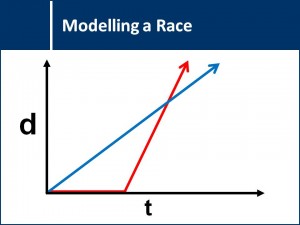
Modelling a Race
The concepts of position, velocity and time will be used to model a scenario involving two people racing towards a finish line. Information will be presented through equations and graphs.

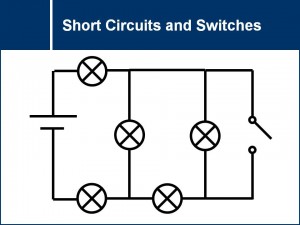
Short Circuits and Switches
The effect short circuits and switches have on complicated circuits involving resistors in series and parallel will be explored.

TEDED: Lessons Worh Sharing
As I am thinking of how to use modern technology in order to change how mathematics and science are taught and learned by our students, I realize that sometimes, we just need to take a quick look to see how collaboration of educators all around the world opens new opportunities. As we are working on […]
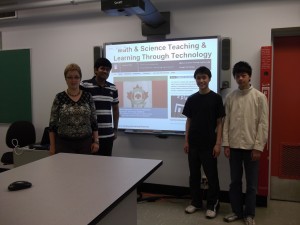
MSTLTT Site Presentation
Today Harish, Jeremy and Kevin presented our project to graduate students (mathematics and science teachers) in one of the graduate courses at the Department of Curriculum and Pedagogy at the Faculty of Education.
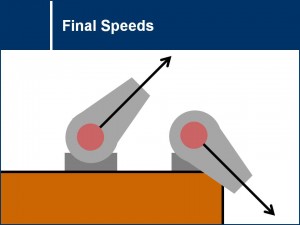
Final Speeds
Energy conservation will be used to compare the final speeds of objects dropped from a variety of different initial states. Students must understand how gravitational potential energy converts into kinetic energy.
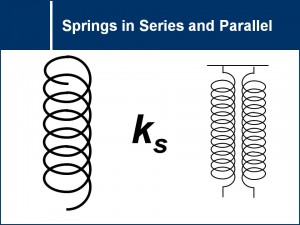
Springs in Series and Parallel
The following set of questions investigate how springs behave when they are added together in series and parallel.
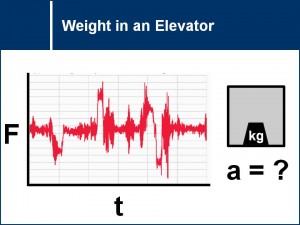
Weight in an Elevator
How does a reading on a scale change when on a moving elevator? Scenarios with an elevator moving at different velocities and acceleration will be considered. The concepts learned will then be used to analyze data from a real-life experiment.
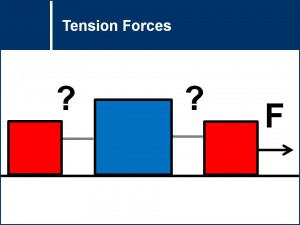
Tension Forces
The following set of questions apply Newton’s Second Law to scenarios with multiple blocks held together by the tension force from strings.
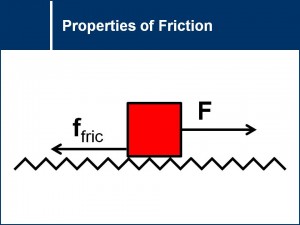
Properties of Friction
What are factors that determine the force of friction? The following set of questions explore the behavior of friction on both moving and stationary objects.
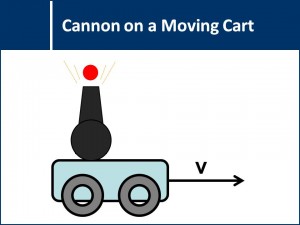
Cannon on a Moving Cart
What do the velocity-time and acceleration-time graphs look like for a cannon ball launched from a moving cart? This scenario will be analyzed by breaking down both velocity and acceleration into vertical and horizontal components.
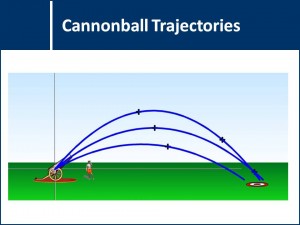
Cannonball Trajectories
Velocity will be separated into vertical and horizontal components in order to analyze the factors that influence the trajectory of a cannonball. The questions are based off the following PhET simulation, which can be used to double check answers: http://phet.colorado.edu/en/simulation/projectile-motion

Welcome to Mathematics & Science Teaching & Learning through Technology Database
If you are a K-12 mathematics or science teacher, a student or a parent, a teacher educator or a future teacher, this web site is designed for you! We are a an international team of mathematics and science educators (K-12 teachers and faculty members), graduate and undergraduate students from the University of British Columbia in […]