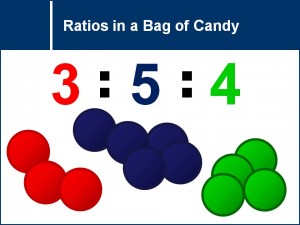
Ratios in a Bag of Candy
This set of questions will explore the properties of ratios in the context of a bag of candy. Solve these questions with real candy for twice the fun.
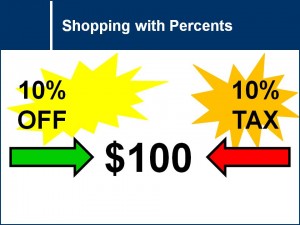
Shopping with Percents
How are percents used in everyday shopping? Do you want to make sure you are saving as much money as possible? The following set of questions will show you how to calculate your savings the next time you go shopping.
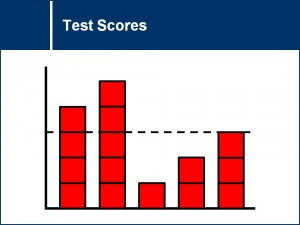
Test Scores
To what extent can the mean, median, mode and range accurately describe a set of numbers? The mean, median, mode and range will be used to analyze a variety of different number sets to better understand what each represents.

Electric Vocabulary
As we continue discussing the idea of a flipped classroom, we keep thinking of useful resources that the students can use outside of the classroom. As vocabulary is often a very important part of a science lesson, I thought that this TED Ed lesson about electric vocabulary might be of interest to science teachers.

ClassAction: Amazing resource for astronomy teaching
During the past few days I have been attending the Summer Meeting of the American Association of Physics Teachers. The conference is taking place at the University of Pennsylvania in Philadelphia. Today, Kevin Lee from the University of Nebraska Lincoln received a very prestigious AAPT award for Undergraduate teaching: Holiday Resnick award for excellence in […]
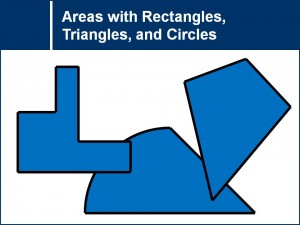
Areas with Rectangles, Triangles, and Circles
Do you need to know the length of every side to calculate the area of these shapes? The following set of questions will explore strategies for finding the areas of different shapes.
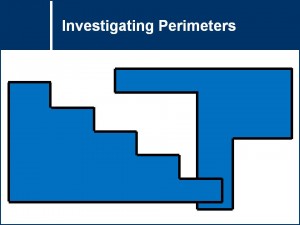
Investigating Perimeters
The following set of questions will introduce various methods for finding the perimeter of objects with missing side lengths. Ways to maximize and minimize perimeter will also be explored.
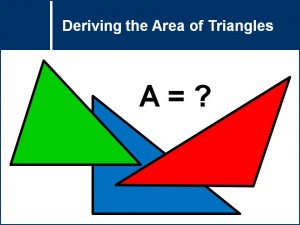
Deriving the Area of Triangles
What is the formula to calculate the area of a triangle? This set of questions will show visually how we can find the area of triangles using only the area of rectangles.
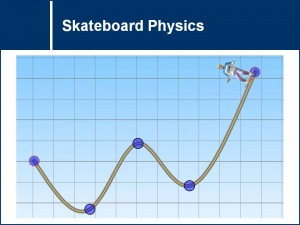
Skateboard Physics
Concepts of kinetic and potential energy will be explored by analyzing the motion of a skateboarder on a curved track.
The questions are based off the following PhET simulation, which can be used to double check answers:
http://phet.colorado.edu/en/simulation/energy-skate-park
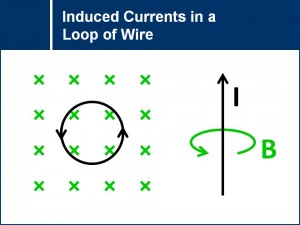
Induced Currents In a Loop of Wire
The conditions required in order to induce a current in a loop of wire will be explored. Both changes in magnitude and direction will be considered.
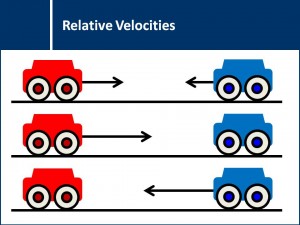
Relative Velocities
An object can appear to have different velocities depending on the velocity of an observer. In this problem set, scenarios will be analyzed from different frames of reference in order to determine the velocity of one object relative to another.
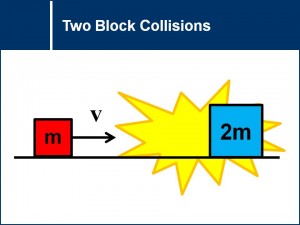
Two Block Collisions
How do two objects behave after they collide with one another? The role of momentum and energy in determining the outcome of collisions will be explored in the following set of questions.
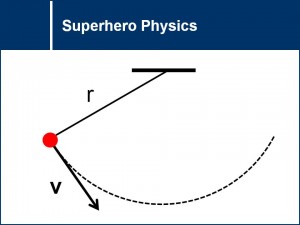
Superhero Physics
What are the forces involved when swinging on a rope? Free-body diagrams will be used to analyze the forces on a superhero as he swings from one building to another.
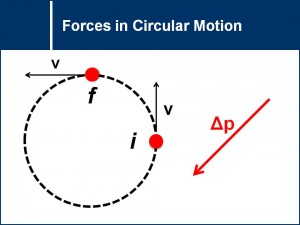
Forces in Circular Motion
This set of questions investigates the forces involved in changes of direction. Conclusions about the direction of forces in circular motion will be discovered without the use of calculations or mathematical formulas.
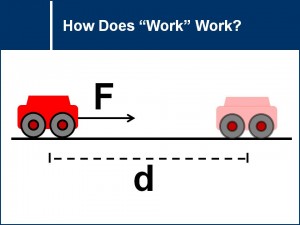
How Does “Work” Work?
This set of questions explore the factors that affect the amount of work done on an object as well as how work translates into kinetic energy.