The University of British Columbia
UBC - A Place of Mind
The University of British Columbia Vancouver campus
Math & Science Teaching & Learning through Technology
  • Home
  • Our story
    • Our Team
    • Contact Us
  • Research
  • Tech 4 STEM
  • Elementary
    • Mathematics
      • Numbers
      • Shape and Space
      • Data and Chance
    • Life Science
      • Characteristics of Living Things
      • Needs of Living Things
      • Plant Growth and Changes
      • Ecosystems
    • Earth and Space Science
      • Exploration of Extreme Environments
  • Secondary
    • Mathematics
      • Numbers
      • Relations and Functions
      • Trigonometry and Geometry
      • Sequences and Series
      • Statistics and Probability
      • Financial Mathematics
      • Calculus
    • Physics
      • Vectors
      • Kinematics
      • Dynamics
      • Momentum
      • Work, Energy, Power
      • Thermodynamics
      • Circular Motion
      • Gravitation
      • Wave motion and Optics
      • Particle and Nuclear Physics
      • Torque and Equilibrium
      • Electrostatics
      • Circuits
      • Electromagnetism
      • Special Relativity
    • Chemistry
      • Skills and Processes
      • Matter
      • Atomic Theory
      • Stoichiometry
      • Chemical Reactions
      • Solution Chemistry
      • Organic Chemistry
      • Equilibrium
      • Reaction Kinetics
      • Acids and Bases
      • Oxidation and Reduction
    • Biology
      • Skills and Processes
      • Taxonomy
      • Evolution
      • Ecology
      • Microbiology
      • Plant Biology
      • Animal Biology
      • Cell Biology
      • Human Biology
    • Earth and Space Science
      • Astronomy
  • Contribute
  • News And Events
» Home » jermko

jermko

jermko

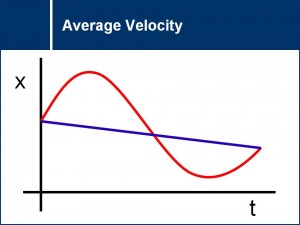
Average Velocity

Average Velocity

By jermko on May 31, 2014

This question set tests the concept of average velocity using both equations and graphs. Students will be able to recognize the difference between average velocity and average speed.


Download PDF     Download PPT

Read More | No Comments

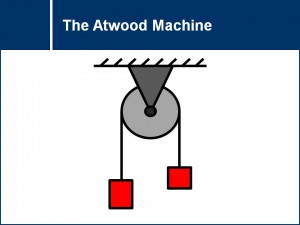
The Atwood Machine

The Atwood Machine

By jermko on May 31, 2014

This question derives the equation of acceleration of the Atwood Machine. The properties of this interesting machine will then be analyzed.
Download PDF     Download PPT

Read More | No Comments

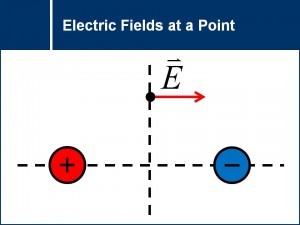
Electric Fields at a Point

Electric Fields at a Point

By jermko on May 31, 2014

An introductory set to electric fields. This set focuses on finding the electric field at a single point due to different charge configurations.
Download PDF     Download PPT

Read More | No Comments

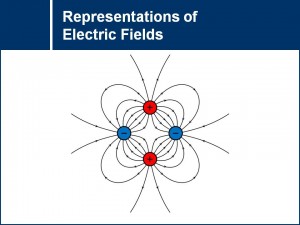
Representations of Electric Fields

Representations of Electric Fields

By jermko on May 31, 2014

Explore different visual representations of electric fields in this question set, including vector fields and electric field lines.
Download PDF     Download PPT

Read More | No Comments

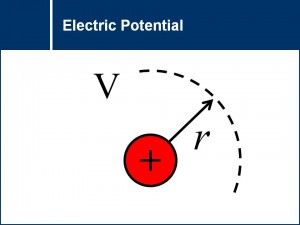
Electric Potential

Electric Potential

By jermko on May 31, 2014

Both electric potential energy and electric potential are fully explored in this question set. Scenarios involving parallel charged plates and point charge systems will be considered.
Download PDF     Download PPT

Read More | No Comments

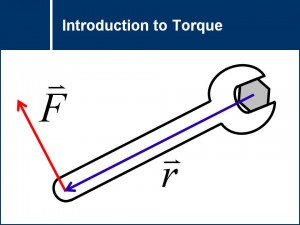
Introduction to Torque

Introduction to Torque

By jermko on May 31, 2014

Introduces the concept of torque. Both its magnitude and direction are considered when analyzing the objects in rotational equilibrium.
Download PDF     Download PPT

Read More | No Comments

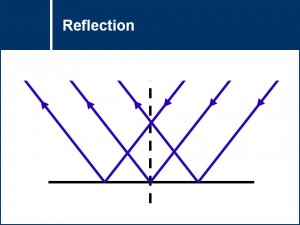
Reflection

Reflection

By jermko on March 1, 2014

This question set outlines the basics of reflection. The law of reflection and specular and diffuse reflection.
Download PDF     Download PPT

Read More | No Comments

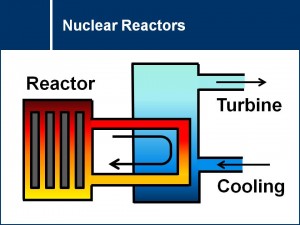
Nuclear Reactors

Nuclear Reactors

By jermko on February 8, 2014

The properties of fission reactions that make it ideal for producing energy are explored. Learn how nuclear reactors are able to convert this nuclear energy into electricity.
Download PDF     Download PPT

Read More | No Comments

Fission and Fusion Reactions

Fission and Fusion Reactions

By jermko on February 8, 2014

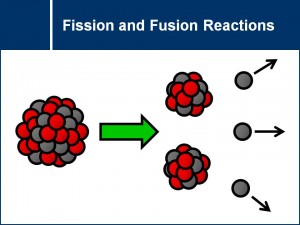
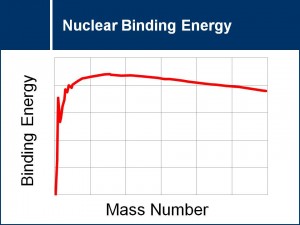
The properties of nuclear fission and nuclear fusion reactions are analyzed in detail. The binding energy curve is used to determine whether or not a given reaction is expected to produce energy.
Download PDF     Download PPT

Read More | No Comments

Nuclear Binding Energy

Nuclear Binding Energy

By jermko on February 8, 2014

An introduction to the concepts of mass defect and mass-energy equivalence. The procedure to calculate binding energies will also be covered.
Download PDF     Download PPT

Read More | No Comments

Transformation of Lines

Transformation of Lines

By jermko on December 15, 2013

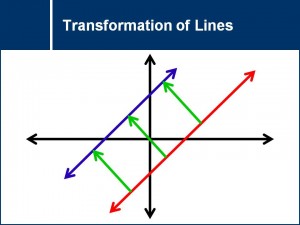
An introductory question set on translations, reflections, and expansions/compressions. Learn how these basic transformations change the graph and equation of lines.
Download PDF     Download PPT

Read More | No Comments

Transformation of Functions

Transformation of Functions

By jermko on December 15, 2013

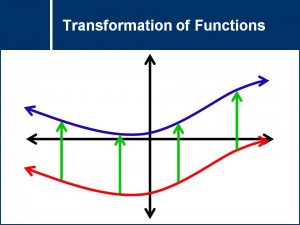
This question works through the steps required to apply translations, reflections, and stretches to all basic functions.
Download PDF     Download PPT

Read More | No Comments

Inverse Functions

Inverse Functions

By jermko on December 15, 2013

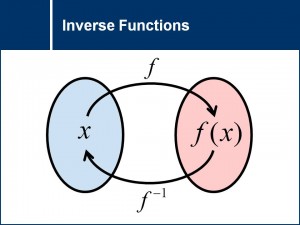
Learn how to find the inverse of a function given a table of values, graph, or equation.
Download PDF     Download PPT

Read More | No Comments

Reciprocals of Functions

Reciprocals of Functions

By jermko on December 15, 2013

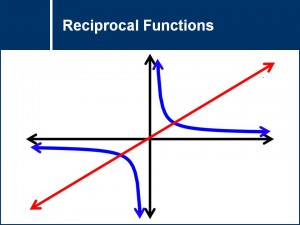
This question set explains how the graph of a function changes when we take its reciprocal.
Download PDF     Download PPT

Read More | No Comments

Transformations on Trigonometric Functions

Transformations on Trigonometric Functions

By jermko on December 15, 2013

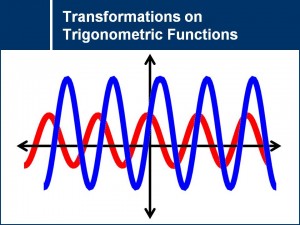
Learn how to apply transformations to trigonometric functions. Students should understand that many transformations are equivalent when applied to periodic functions.
Download PDF     Download PPT

Read More | No Comments

  • 1
  • 2
  • Next
Department of Curriculum and Pedagogy
Vancouver Campus
Scarfe Building
2125 Main Mall
Vancouver, BC Canada V6T1Z4
Tel 604 822 5422
Fax 604 822 4714
Email marina.milner-bolotin@ubc.ca
Back to top
The University of British Columbia
  • Emergency Procedures |
  • Terms of Use |
  • Copyright |
  • Accessibility