Factors Influencing College Science Success
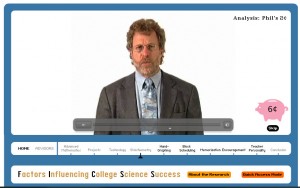 If you are a science or mathematics teacher, you probably wondered, what your students take out of your classes beyond a college or university admission. How does your teaching benefit your students? What are the skills that they will be able to transfer to their undergraduate studies that will serve them well? Luckily, Prof. Philip M. Sadler from Harvard and his team decided to conduct a study to figure it out. Yes, this is the same Prof. Philip Sadler who was the educator behind “A Private Universe” video that many of us have seen and used in our own teaching. I would strongly recommend you to try and check for yourself if you know your students well enough…This is an interactive website that bring the results of science education research to educators in the field in a fun and informative way.
And on a very positive note, for his work in the area of science education and numerous contributions to promoting science teaching and learning, Dr. Philip Sadler has been awarded the Robert A. Millikan Award by the American Association of Physics Teachers. We congratulate Prof. Sadler and wish him and his team continuous success.
Have a Wonderful School Year!
Dear Colleagues:
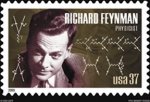
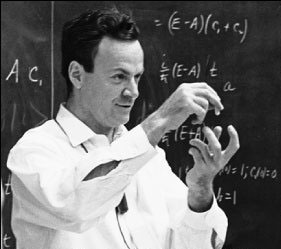
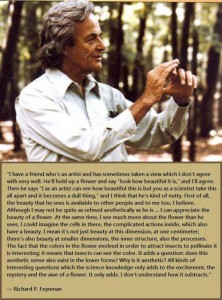 On behalf of the MSTLTT Team I would like to wish you all a wonderful school year. I hope it will bring lots of memorable events and we will have the time to enjoy and explore the beauty of science and mathematics as much as Richard Feynman did. As a gift for a new school year, I would like to share with you a very special web site about Richard Feynman – http://www.richard-feynman.net
I also hope that we all have time and willingness to share our great teaching ideas and materials. While each one of us has our own strengths and favourite teaching ideas, but we rarely have an opportunity to share it with others. Imagine how much better teachers we will become if we have an opportunity to share with our colleagues and with new teachers and to hear what they have to say about our ideas. We hope that this web site will provide all of us with an opportunity to share and to contribute to improving science and mathematics teaching and learning in BC, Canada and around the world… Have a wonderful school year!!!
“I have a friend who’s an artist and has sometimes taken a view which I don’t agree with very well. He’ll hold up a flower and say “look how beautiful it is,” and I’ll agree. Then he says “I as an artist can see how beautiful this is but you as a scientist take this all apart and it becomes a dull thing,” and I think that he’s kind of nutty. First of all, the beauty that he sees is available to other people and to me too, I believe. Although I may not be quite as refined aesthetically as he is … I can appreciate the beauty of a flower. At the same time, I see much more about the flower than he sees. I could imagine the cells in there, the complicated actions inside, which also have a beauty. I mean it’s not just beauty at this dimension, at one centimeter; there’s also beauty at smaller dimensions, the inner structure, also the processes. The fact that the colors in the flower evolved in order to attract insects to pollinate it is interesting; it means that insects can see the color. It adds a question: does this aesthetic sense also exist in the lower forms? Why is it aesthetic? All kinds of interesting questions which the science knowledge only adds to the excitement, the mystery and the awe of a flower. It only adds. I don’t understand how it subtracts.”