The University of British Columbia
UBC - A Place of Mind
The University of British Columbia Vancouver campus
Math & Science Teaching & Learning through Technology
  • Home
  • Our story
    • Our Team
    • Contact Us
  • Research
  • Tech 4 STEM
  • STEAM
  • Elementary
    • Mathematics
      • Numbers
      • Patterns and Relations
      • Shape and Space
      • Data and Chance
    • Processes of Science
      • Classifying Objects
      • Observations
      • Measurement
      • Experiments
      • Interpreting Data
      • Developing Models
      • Scientific Method
    • Life Science
      • Characteristics of Living Things
      • Needs of Living Things
      • Animal Growth and Changes
      • Plant Growth and Changes
      • Habitats and Communities
      • Human Body
      • Diversity of Life
      • Ecosystems
    • Physical Science
      • Properties of Objects and Materials
      • Force and Motion
      • Properties of Matter
      • Materials and Structures
      • Light and Sound
      • Forces and Simple Machines
      • Electricity
      • Chemistry
    • Earth and Space Science
      • Surroundings
      • Daily and Seasonal Changes
      • Air, Water, and Soil
      • Stars and Planets
      • Weather
      • Renewable and Non-Renewable Resources
      • Exploration of Extreme Environments
      • Earth’s Crust
  • Secondary
    • Mathematics
      • Numbers
      • Relations and Functions
      • Trigonometry and Geometry
      • Sequences and Series
      • Statistics and Probability
      • Financial Mathematics
      • Calculus
        • Differential Calculus
        • Integral Calculus
    • Physics
      • Vectors
      • Kinematics
        • 1-D Kinematics
        • 2-D Kinematics
      • Dynamics
        • Forces and Newton’s Laws
        • Springs
        • Newton’s Laws
      • Momentum
        • Collisions
        • Momentum Principle
      • Work, Energy, Power
      • Thermodynamics
      • Circular Motion
      • Gravitation
      • Wave motion and Optics
      • Particle and Nuclear Physics
      • Equilibrium
      • Electrostatics
      • Circuits
      • Electromagnetism
      • Special Relativity
    • Chemistry
      • Skills and Processes
        • Safety
        • Measurement
        • Data Representation
      • Matter
  • Contribute
  • Spotlight
» Home » shape and space

shape and space

Measurement: Volume

Measurement: Volume

By jermko on August 25, 2013

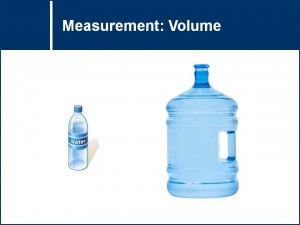
The following set of questions will explore how to best compare and measure using non-standard units of measurement in relation to the volume (capacity) of objects.
Download PDF     Download PPT

Read More | No Comments

Measurement: Mass II

Measurement: Mass II

By jermko on August 25, 2013

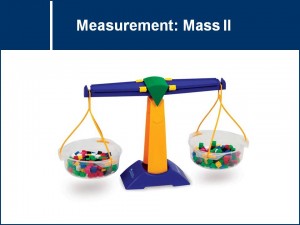
This set of questions explores the measurement of mass (weight) using nonstandard units of measurement, estimation and ordering.
Download PDF     Download PPT

Read More | No Comments

Measurement: Mass I

Measurement: Mass I

By jermko on August 25, 2013

The following set of questions will explore how to best compare and measure using non-standard units of measurement in relation to the mass (weight) of objects.
Download PDF     Download PPT

Read More | No Comments

Measurement: Length

Measurement: Length

By Harish Appana Satya on July 14, 2013

The following set of questions will explore how to best compare and measure using non-standard units of measurement in relation to the length of objects.
Download PDF     Download PPT

Read More | No Comments

Measurement: Calendar

Measurement: Calendar

By Harish Appana Satya on July 14, 2013

This problem set deals with the ability to understand the days of the week and months of the year.
Download PDF     Download PPT

Read More | No Comments

Polygon Angles

Polygon Angles

By Harish Appana Satya on August 1, 2012

This problem set deals with the internal and external angles of the polygons up to an octagon.
Download PDF     Download PPT

Read More | No Comments

Diagonals

Diagonals

By Harish Appana Satya on August 1, 2012

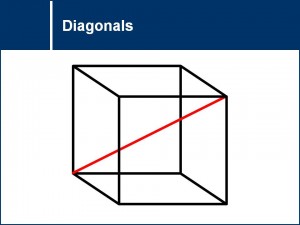
Varying lines and diagonals in cubes and tetrahedral are examined and solved for in this series of problems.
Download PDF     Download PPT

Read More | No Comments

Sierpinski Triangle

Sierpinski Triangle

By Harish Appana Satya on August 1, 2012

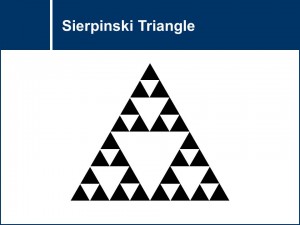
An introduction to ratio and percentages using the iterative creation of a Sierpinski triangle.
Download PDF     Download PPT

Read More | No Comments

Areas with Rectangles, Triangles, and Circles

Areas with Rectangles, Triangles, and Circles

By Harish Appana Satya on July 30, 2012

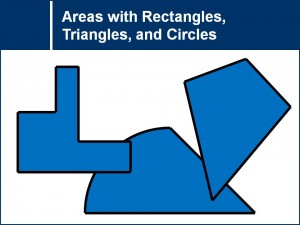
Do you need to know the length of every side to calculate the area of these shapes? The following set of questions will explore strategies for finding the areas of different shapes.
Download PDF     Download PPT

Read More | No Comments

Investigating Perimeters

Investigating Perimeters

By Harish Appana Satya on July 30, 2012

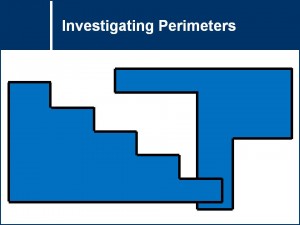
The following set of questions will introduce various methods for finding the perimeter of objects with missing side lengths. Ways to maximize and minimize perimeter will also be explored.
Download PDF     Download PPT

Read More | No Comments

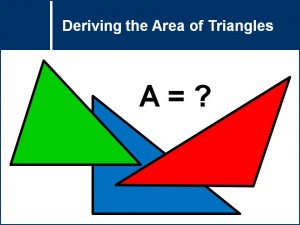
Deriving the Area of Triangles

Deriving the Area of Triangles

By Harish Appana Satya on July 27, 2012

What is the formula to calculate the area of a triangle? This set of questions will show visually how we can find the area of triangles using only the area of rectangles.
Download PDF     Download PPT

Read More | No Comments

Department of Curriculum and Pedagogy
Vancouver Campus
Scarfe Building
2125 Main Mall
Vancouver, BC Canada V6T1Z4
Tel 604 822 5422
Fax 604 822 4714
Email marina.milner-bolotin@ubc.ca
Back to top
The University of British Columbia
  • Emergency Procedures |
  • Terms of Use |
  • Copyright |
  • Accessibility