The University of British Columbia
UBC - A Place of Mind
The University of British Columbia Vancouver campus
Math & Science Teaching & Learning through Technology
  • Home
  • Our story
    • Our Team
    • Contact Us
  • Research
  • Tech 4 STEM
  • Elementary
    • Mathematics
      • Numbers
      • Shape and Space
      • Data and Chance
    • Life Science
      • Characteristics of Living Things
      • Needs of Living Things
      • Plant Growth and Changes
      • Ecosystems
    • Earth and Space Science
      • Exploration of Extreme Environments
  • Secondary
    • Mathematics
      • Numbers
      • Relations and Functions
      • Trigonometry and Geometry
      • Sequences and Series
      • Statistics and Probability
      • Financial Mathematics
      • Calculus
    • Physics
      • Vectors
      • Kinematics
      • Dynamics
      • Momentum
      • Work, Energy, Power
      • Thermodynamics
      • Circular Motion
      • Gravitation
      • Wave motion and Optics
      • Particle and Nuclear Physics
      • Torque and Equilibrium
      • Electrostatics
      • Circuits
      • Electromagnetism
      • Special Relativity
    • Chemistry
      • Skills and Processes
      • Matter
      • Atomic Theory
      • Stoichiometry
      • Chemical Reactions
      • Solution Chemistry
      • Organic Chemistry
      • Equilibrium
      • Reaction Kinetics
      • Acids and Bases
      • Oxidation and Reduction
    • Biology
      • Skills and Processes
      • Taxonomy
      • Evolution
      • Ecology
      • Microbiology
      • Plant Biology
      • Animal Biology
      • Cell Biology
      • Human Biology
    • Earth and Space Science
      • Astronomy
  • Contribute
  • News And Events
» Home » graphing

graphing

Exponential Functions

Exponential Functions

By mvinayag on September 1, 2015

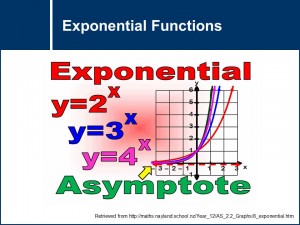
Discover how functions behave when involving exponents. This question set deals with exponential graphs and everyday applications of exponential functions.

Download PDF     Download PPT

Read More | No Comments

Numbers: Absolute Value of Functions

Numbers: Absolute Value of Functions

By mvinayag on May 7, 2015

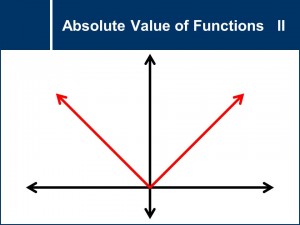
Discover how functions behave when involving absolute values. This question set deals heavily with graphs of functions and how they change when their absolute value is taken.
Download PDF     Download PPT

Read More | No Comments

Transformation of Lines

Transformation of Lines

By jermko on December 15, 2013

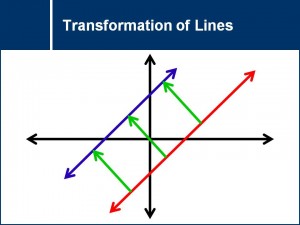
An introductory question set on translations, reflections, and expansions/compressions. Learn how these basic transformations change the graph and equation of lines.
Download PDF     Download PPT

Read More | No Comments

Transformation of Functions

Transformation of Functions

By jermko on December 15, 2013

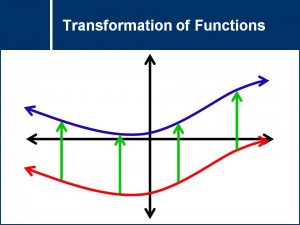
This question works through the steps required to apply translations, reflections, and stretches to all basic functions.
Download PDF     Download PPT

Read More | No Comments

Inverse Functions

Inverse Functions

By jermko on December 15, 2013

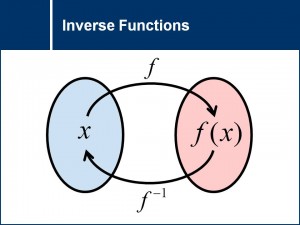
Learn how to find the inverse of a function given a table of values, graph, or equation.
Download PDF     Download PPT

Read More | No Comments

Reciprocals of Functions

Reciprocals of Functions

By jermko on December 15, 2013

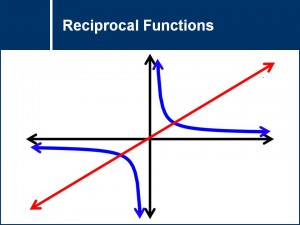
This question set explains how the graph of a function changes when we take its reciprocal.
Download PDF     Download PPT

Read More | No Comments

Transformations on Trigonometric Functions

Transformations on Trigonometric Functions

By jermko on December 15, 2013

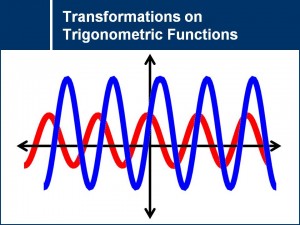
Learn how to apply transformations to trigonometric functions. Students should understand that many transformations are equivalent when applied to periodic functions.
Download PDF     Download PPT

Read More | No Comments

Log Functions

Log Functions

By jermko on December 7, 2013

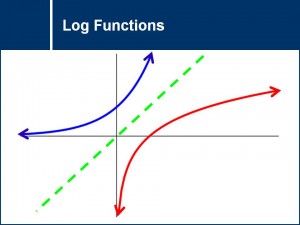
Introduces the graph of the log function by analyzing the inverse of exponential functions.
Download PDF     Download PPT

Read More | No Comments

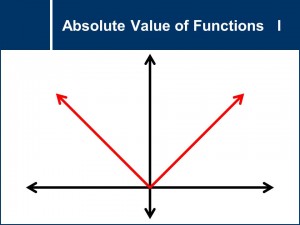
Absolute Value of Functions

Absolute Value of Functions

By jermko on September 11, 2013

Discover how functions behave when involving absolute values. This question set deals heavily with graphs of functions and how they change when their absolute value is taken.
Download PDF     Download PPT

Read More | No Comments

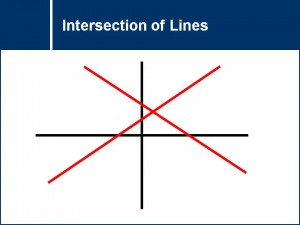
Intersection of Lines

Intersection of Lines

By Harish Appana Satya on June 23, 2013

Determine the coordinates where two different lines intersect to solve word problems involving linear relations.
Download PDF     Download PPT

Read More | No Comments

Parallel and Perpendicular Lines

Parallel and Perpendicular Lines

By Harish Appana Satya on June 23, 2013

Discover how the slope of a line compares between lines are parallel or perpendicular to one another.
Download PDF     Download PPT

Read More | No Comments

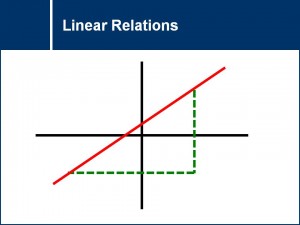
Linear Relations

Linear Relations

By Harish Appana Satya on June 23, 2013

This question set explores the graphs and equations of lines in slope-intercept form. By the end of the question set, students should be able to calculate the slope and y-intercept of a line given its graph or equation.
Download PDF     Download PPT

Read More | No Comments

Parabolas

Parabolas

By Harish Appana Satya on June 23, 2013

This question set shows how quadratic functions can be graphed using the vertex and zeroes.
Download PDF     Download PPT

Read More | No Comments

Department of Curriculum and Pedagogy
Vancouver Campus
Scarfe Building
2125 Main Mall
Vancouver, BC Canada V6T1Z4
Tel 604 822 5422
Fax 604 822 4714
Email marina.milner-bolotin@ubc.ca
Back to top
The University of British Columbia
  • Emergency Procedures |
  • Terms of Use |
  • Copyright |
  • Accessibility